22
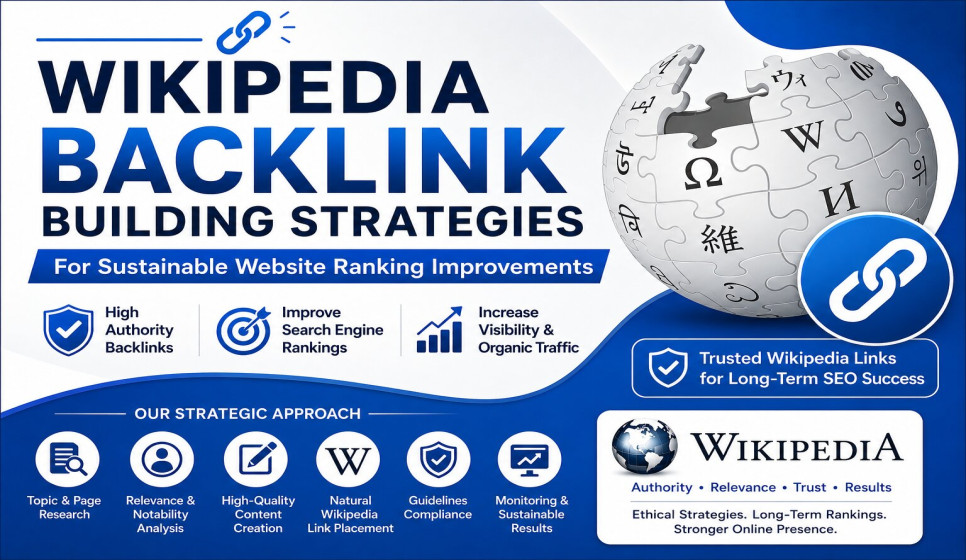
AugWikipedia Backlink Building Strategies for Sustainable Website Ranking Improvements
Building a robust backlink profile is a crucial aspect of long-term search engine optimization. However, effective SEO extends beyond merely accumulating as many links as possible. Search engines are increasingly prioritizing relevance, quality, credibility, helpful content, and the overall value a website offers to its users. When approached thoughtfully, ethically, and with sincere informational intent, Wikipedia backlink building can serve as a supportive strategy.
Wikipedia is among the most esteemed online encyclopedias globally, featuring articles on millions of topics. Its pages often cite external sources, aiding readers in verifying information or delving deeper into a subject. This creates opportunities for websites that provide credible research, statistics, educational materials, studies, and other valuable content.
Nonetheless, Wikipedia should not be regarded as a mere backlink directory. Links must have a genuine editorial purpose, and contributors can remove links that are irrelevant, promotional, unreliable, or otherwise unsuitable. A sustainable strategy should concentrate on earning pertinent citations rather than forcefully inserting backlinks.
What Is Wikipedia Backlink Building?
Wikipedia backlink building entails pinpointing relevant Wikipedia articles where an external resource may legitimately enhance or expand upon existing content.
For instance, if a website publishes an original industry report with valuable statistics, and a Wikipedia article covers the same topic while requiring a credible source for a factual assertion, that report could potentially serve as an appropriate citation.
The essential principle here is relevance. A backlink should assist the reader in comprehending the topic rather than existing solely for SEO purposes.
This distinguishes Wikipedia from many traditional link-building techniques. The aim is not to scatter links everywhere but to identify instances where an external resource genuinely fits.
1. Create Content Worth Citing
The cornerstone of any successful Wikipedia backlink strategy is high-quality content.
Before seeking backlink opportunities, assess the resources on your website. Content worthy of citation may include:
Original research
Industry statistics
Detailed studies
Academic resources
Surveys and reports
Historical information
Technical documentation
Educational guides
Original data
Expert analysis
A brief promotional service page typically offers less value as a reference compared to a comprehensive resource containing independently useful information.
Establishing strong content as a foundation not only strengthens your SEO strategy but can also produce opportunities for citations from other websites.
2. Research Relevant Wikipedia Articles
Once valuable resources are available, identify Wikipedia articles that relate to your industry or area of interest.
Search for pages where your content could genuinely assist readers. Take note of the references and sources already utilized. This will give you insight into what types of resources are deemed suitable for that specific subject.
However, finding a page with an external link does not automatically mean your website should replace it. The suggested resource must be relevant and provide a valid reason for inclusion.
3. Analyze Citation Gaps
A citation gap arises when an article contains information that would benefit from additional reputable sourcing.
For example, a Wikipedia page may make a factual claim about market trends, technology adoption, historical events, or industry statistics, but has limited supporting references.
If your website possesses a reliable source that directly supports the claim, it could present a potential citation opportunity.
The emphasis should always be on enhancing the article rather than manipulating its backlink profile.
4. Focus on Topical Relevance
Relevance stands as a key principle of sustainable link building.
For example, a website centered on web development should concentrate on Wikipedia topics related to programming, software development, web technology, or pertinent business subjects rather than unrelated pages.
Links that are topically relevant offer more sense to users and establish a stronger connection between the source and destination.
Instead of seeking numerous random Wikipedia links, concentrate on a select few highly relevant opportunities.
5. Use Accurate and Reliable Information
Wikipedia places great importance on verifiability and reliable sources. Therefore, the content behind a potential citation must be factual and clear.
Steer clear of unsupported assertions, inflated statistics, misleading content, or information produced solely for promotional purposes.
If your website produces research, clearly outline the methodology, data sources, dates, limitations, and findings. Transparency enhances the usefulness of informational resources for both readers and publishers.
6. Avoid Promotional Anchor Text
Wikipedia is not designed for keyword-driven link building.
Utilizing commercial anchor text merely to target keywords can render a link appear promotional, potentially diminishing its suitability as a citation.
Instead, links should accurately identify the referenced resource. The surrounding text should provide factual context rather than promotional language.
The optimal approach is allowing the citation to serve the reader first and foremost.
7. Don't Depend on Wikipedia Alone
A significant error in backlink building is relying solely on a single type of backlink.
A sustainable SEO campaign should maintain a diversified link profile. Depending on the nature of the website and industry, this may encompass:
Editorial backlinks
Digital PR mentions
Industry publications
Resource-page links
Guest contributions
Business citations
Partner websites
Relevant directories
Original research citations
Brand mentions
Wikipedia can be one facet of this broader strategy rather than the entirety of the campaign.
8. Build a Strong Information Architecture
The quality of the website itself is crucial. Before seeking external citations, ensure important pages are easy to navigate and comprehend.
Create clear categories, informative articles, research pages, and supporting resources. Employ descriptive titles and organize information logically.
A well-structured website makes it simpler for users and publishers to locate useful information.
Strong internal linking can also facilitate visitor distribution across the site and connect related resources.
9. Monitor Citation Quality
After securing a legitimate citation, monitoring is essential.
Wikipedia articles can evolve over time. Editors may revise content, update references, remove outdated sources, or restructure sections.
Instead of attempting to control Wikipedia pages, monitor whether the citation remains pertinent and if your underlying resource continues to supply accurate information.
If your content becomes outdated, refresh it with new research and current data.
10. Prioritize Sustainable SEO Practices
Sustainable backlink building emphasizes long-term value instead of short-term manipulation.
Avoid automated Wikipedia edits, bulk link placements, irrelevant citations, fictitious references, misleading claims, or tactics designed strictly to exploit search algorithms.
Such strategies can harm credibility and potentially lead to link removals.
A superior approach involves creating assets that naturally merit references. High-quality research, original data, useful tools, and comprehensive educational resources can attract links from various sources.
Benefits of a Strategic Wikipedia Approach
A thoughtfully crafted Wikipedia strategy can yield numerous potential advantages.
Increased Visibility
Relevant citations can increase a website's exposure to individuals researching a specific topic.
Referral Traffic
Readers may click on a citation when seeking additional information.
Brand Awareness
Associating with useful information can enhance recognition among a pertinent audience.
Content Discovery
Wikipedia may assist users in discovering resources they might not find through standard searches.
Broader Link Opportunities
Creating citation-worthy content can draw attention from journalists, bloggers, researchers, publishers, and industry websites beyond Wikipedia.
Wikipedia Links Are Not a Guaranteed Ranking Shortcut
It is crucial to have realistic expectations. A Wikipedia backlink does not ensure improved Google rankings.
Wikipedia external links often utilize attributes that differentiate them from traditional followed links; therefore, their value should not be assessed solely by whether they convey conventional link equity.
The broader advantages can encompass referral traffic, visibility, credibility, content discovery, and alignment with relevant information.
SEO performance hinges on multiple factors, including content quality, technical health, search intent, website usability, competition, internal linking, and the overall backlink profile.
How to Build a Sustainable Wikipedia Backlink Campaign
A practical workflow might resemble this:
Step 1:
Audit the website and existing content.
Step 2:
Identify research and resources that offer genuine informational value.
Step 3:
Explore relevant Wikipedia topics.
Step 4:
Review existing citations and identify legitimate gaps.
Step 5:
Assess whether your resource directly supports the relevant information.
Step 6:
Adhere to Wikipedia's editorial expectations and community guidelines.
Step 7:
Avoid promotional or irrelevant link placements.
Step 8:
Continue enhancing the underlying content.
Step 9:
Diversify the overall backlink strategy.
Step 10:
Evaluate results using pertinent SEO and traffic metrics.
This process underscores quality and sustainability over quantity.
Frequently Asked Questions (FAQs)
Are Wikipedia backlinks beneficial for SEO?
ANSWER:
Wikipedia backlinks can be advantageous indirectly by providing referral traffic, enhancing visibility, increasing brand exposure, and facilitating content discovery. However, they should not be viewed as a foolproof method for enhancing search rankings.
Can Wikipedia backlinks boost Google rankings?
ANSWER:
A link from Wikipedia cannot assure an improvement in Google rankings. SEO performance relies on various factors, including the quality of content, technical optimization, relevance, user experience, and the overall backlink profile.
Are Wikipedia backlinks dofollow?
ANSWER:
Typically, Wikipedia utilizes link attributes that differentiate external links from standard dofollow backlinks. Thus, their value should not be assessed solely based on traditional link equity.
What type of content can draw Wikipedia citations?
ANSWER:
Original research, industry statistics, studies, surveys, technical documents, educational resources, historical data, and comprehensive informational guides can potentially attract citations when they are relevant and credible.
Why is relevance crucial for Wikipedia backlinks?
ANSWER:
A relevant citation directly supports the subject at hand and offers valuable information to readers. Irrelevant links may be perceived as promotional or inappropriate and are likely to be removed.
Can every website obtain a Wikipedia backlink?
ANSWER:
No. A website must provide a resource that genuinely supports a pertinent Wikipedia topic. Promotional, unreliable, or unrelated pages may not be deemed suitable references.
How can I identify Wikipedia backlink opportunities?
ANSWER:
Investigate Wikipedia articles that pertain to your industry and review their references, citations, and information gaps. Seek instances where your existing content can legitimately reinforce a factual statement.
Should I incorporate keyword-rich anchor text on Wikipedia?
ANSWER:
No. Wikipedia citations should be organic and focused on the reader rather than centered around commercial keywords. The resource should be linked because it offers valuable supporting information.
Are Wikipedia backlinks permanent?
ANSWER:
Their permanence cannot be guaranteed. Wikipedia pages undergo constant edits, and citations may be altered or removed if they become outdated, irrelevant, unreliable, or inconsistent with editorial guidelines.
Can Wikipedia backlinks drive website traffic?
ANSWER:
Yes, they can generate referral traffic when readers click a relevant citation to gather more information. The volume of traffic depends on the popularity of the Wikipedia article and the usefulness of the linked resource.
Are Wikipedia backlinks safe for a website?
ANSWER:
A genuine, relevant citation can be part of a sound SEO strategy. However, spammy edits, irrelevant links, misleading information, or manipulative practices can lead to the removal of citations.
Should Wikipedia backlinks be paired with other link-building strategies?
ANSWER:
Yes. A varied backlink approach could include editorial links, digital PR, industry publications, relevant resource pages, guest posts, brand mentions, and other credible sources.
How can I ensure my Wikipedia backlink strategy is sustainable?
ANSWER:
Concentrate on creating high-quality resources that merit citations, maintain accurate information, target relevant subjects, avoid manipulative tactics, and consistently enhance your website's content. Sustainable strategies focus on long-term value rather than the quantity of backlinks.
What are the primary advantages of building Wikipedia backlinks?
ANSWER:
Potential advantages include increased brand visibility, relevant referral traffic, content discovery, greater exposure to interested audiences, and opportunities to position your website as a valuable information resource. These benefits can complement a broader, long-term SEO strategy.
Final Summary,
Wikipedia Backlink Building Strategies for Sustainable Website Ranking Improvements should emphasize relevance, useful content, reliable information, and responsible editorial practices. While Wikipedia backlinks are not a guaranteed shortcut to better rankings, legitimate citations can contribute to online visibility, referral traffic, brand awareness, and content discovery.
The most effective strategy begins with creating information that deserves to be cited. Original research, statistics, detailed guides, studies, and authoritative resources can provide genuine value to readers while generating potential citation opportunities.
Ultimately, sustainable SEO results from building a trustworthy website and earning relevant recognition throughout the web. Wikipedia can aid in achieving that goal when backlinks are approached naturally, ethically, and with the reader's interests prioritized over search engine manipulation.
If you have any questions or concerns, please contact our friendly support team for immediate assistance.
Website: https://rmfreelancer.com/
Email: support@rmfreelancer.com
Phone: +1 307-243-8976
RMFreelancer Office:
30 N Gould St, Ste R, Sheridan, WY 82801, USA


