21
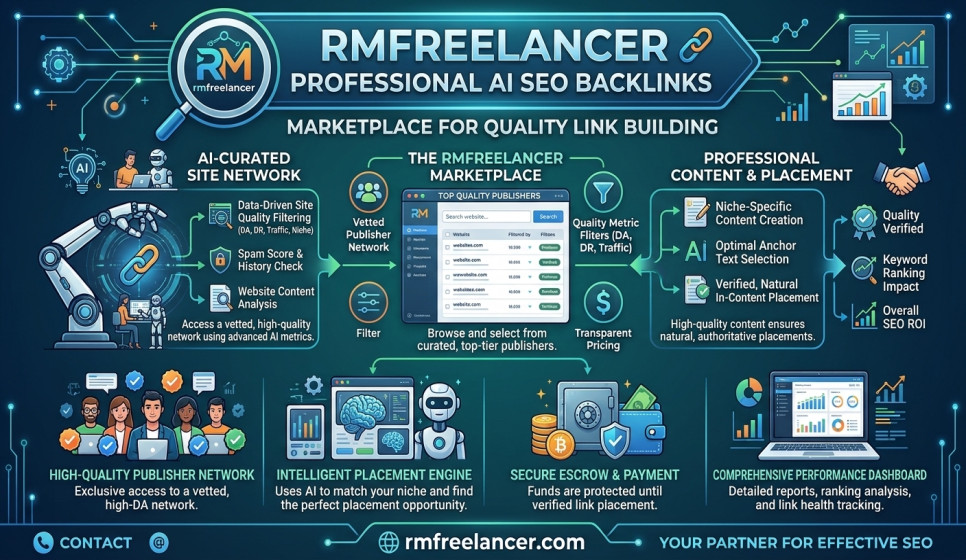
OctProfessional SEO Backlinks Marketplace for Quality Link Building
A professional SEO Backlinks marketplace can simplify the planning, management, and measurement of link building. Instead of searching for publishers individually, businesses can utilize a centralized catalog to identify websites, compare placement details, commission content, and monitor campaign progress. While AI capabilities may expedite research and repetitive tasks, they cannot substitute for careful judgment. The most effective marketplace is not necessarily the one that guarantees the highest number of links; rather, it is the one that assists you in finding pertinent publishers and making informed decisions regarding each placement.
Quality link building begins with a well-defined purpose. A link should be relevant to readers, appropriate for the page it appears on, and align with a legitimate marketing objective. When a platform combines valuable data with clear ordering processes and human oversight, it can help businesses manage this process more effectively. Buyers should still take the time to evaluate the publisher, content, and terms prior to approving an order.
What to Expect from a Professional SEO Backlinks Marketplace
An effective marketplace should integrate publisher discovery with campaign management. Buyers ought to be able to search by topic, country, language, audience, or estimated traffic, and then review each publication before selecting a placement. Detailed listings enable marketers to compare opportunities rather than rely solely on a single authority score. Transparent pricing, editorial requirements, delivery expectations, and replacement policies make the ordering process more manageable.
Robust platforms offer services beyond mere link placement. They may include article writing, link integration in existing content, digital PR, brand mentions, outreach, or backlink monitoring. Such services enable teams to choose strategies that align with the campaign's objectives rather than forcing every goal into a guest post. A platform should also maintain a record of what was ordered, the publication date, and where the link appears.
Enhancing Workflow with AI
AI can effectively organize large publisher catalogs, highlight sites that correspond with a specific topic or market, summarize listing information, and streamline outreach efforts. It can also help with briefs, draft outlines, and routine reporting, ultimately saving time as marketers review results before taking action.
However, an AI label alone does not guarantee that a service is sophisticated or trustworthy. It’s essential to inquire about the actual functionality of the software. Does it recommend publishers based on content relevance or merely organize by domain metrics? Does it utilize up-to-date audience data? Can someone verify the recommendations and reject unsuitable matches? Clear answers are far more significant than broad statements suggesting that the entire process is automatic.
Additionally, AI-generated content requires editorial oversight. A valuable placement should provide accurate information and resonate with the publisher’s audience. Generic text produced at scale can erode trust and yield pages of little value. Treat automation as an assistant for research and administration, rather than a replacement for expertise, originality, or publisher standards.
Evaluating Link Quality
Start by considering topical relevance. Review recent articles from a potential publisher and determine whether the site consistently covers your industry or addresses the questions your customers have. A closely related subject provides readers a compelling reason to follow the link. A large website lacking connection to your audience may prove less valuable than a smaller publication that directly engages the right readers.
Next, assess the signs of genuine editorial activity. Verify that articles are informative, clearly written, and carefully updated. Analyze the site's author information, navigation, and publishing history. Be wary if unrelated topics are clustered together, if pages appear primarily designed to host links, or if all articles contain multiple commercial anchors. While traffic and domain metrics can provide context, they do not validate editorial quality.
Examine the proposed page and the context surrounding your link. The destination should align with the surrounding content and provide readers a useful next step. Request the sample URL or a draft before publication. Confirm whether content creation, editing, translations, and revisions are included in the price. The most inexpensive listing may become costly if essential work is billed separately or if the placement vanishes without resolution.
Examples and Selection of Marketplaces
Different platforms highlight various workflows. WhitePress offers a global SEO and link-building solution, which encompasses article publication, link insertion, digital PR, brand mentions, copywriting, and backlink management. It features publisher filters and publication monitoring as integral components of its platform. This approach may benefit teams that seek both content and placement management within a single workflow.
PressWhizz markets itself as an AI-powered publisher marketplace, emphasizing publisher search, listing data, competitor research, and order tracking. These functionalities may be attractive to teams wanting combined discovery and campaign administration. Like any marketplace, it’s wise to review its current inventory and verify specific service details prior to placing an order. Platform descriptions reflect what providers claim to offer but do not serve as independent evidence of performance.
When evaluating services, concentrate on your campaign requirements. A local business may require publications with a local readership, while a software company might focus on specialized industry coverage. An agency may prioritize multi-market workflows and consolidated reporting. Create a shortlist based on these needs and then compare publisher quality, total cost, support, and terms, rather than merely selecting based on catalog size.
A Secure Approach to Purchasing Placements
Define your goals before initiating a search. Determine if you need referral traffic, brand awareness, expert coverage, or a sponsored placement. Clearly specifying the audience, geography, and page you wish to promote allows a platform or freelancer to suggest pertinent options and provides you with practical criteria for evaluating the results.
Conduct a small trial if you are new to a marketplace. Start with a limited order and confirm that the published page aligns with your description. Review the link, content, disclosure, and reporting. Track referral sessions and relevant conversions when possible. Use these results to decide whether to proceed; avoid assuming that a higher link count will automatically enhance search visibility.
Google’s spam policies define buying or selling links for ranking purposes, automated link generation, and paid articles that confer ranking credit as forms of link spam. Google accepts advertising and sponsorship links when qualified with rel="sponsored" or rel="nofollow." Therefore, inquire about how a paid placement is disclosed and avoid services that promise guaranteed rankings through bulk links. Link building should facilitate meaningful promotion and audience discovery rather than attempts to manipulate search outcomes.
Developing a Sustainable Link Strategy
Select a platform that grants you control, provides clear information, and ensures human support when necessary. Utilize AI to organize research rather than to make uninformed decisions. Scrutinize every publisher, maintain a record of placements, and measure outcomes that matter to your business. A smaller selection of relevant, transparently managed placements is more professional than a larger assortment chosen solely for high metrics or low costs.
10 Frequently Asked Questions
1. What is an SEO Backlinks marketplace?
It is a service that assists businesses in discovering publishers or SEO providers, comparing opportunities, and managing link-building tasks. AI may aid in discovery, filtering, content support, or reporting.
2. What distinguishes a professional link-building marketplace?
Look for clear publisher information, transparent pricing, defined editorial standards, reliable support, and verifiable delivery records.
3. Can AI assure high-quality backlinks?
No. While AI can help organize research, individuals must still assess each publisher, audience, and proposed placement.
4. How do I find a relevant publisher?
Evaluate the site's subject matter, recent articles, audience geography, and publishing standards. The link should be coherent within the context and beneficial to that publication's readers.
5. Are domain authority scores sufficient for evaluating a website?
No. Third-party metrics may assist in comparing sites, but they do not ensure audience relevance, editorial quality, or genuine readership.
6. What link-building services might marketplaces provide?
Depending on the platform, services may include sponsored articles, link insertions, digital PR, copywriting, outreach, brand mentions, and backlink monitoring.
7. Are paid backlinks authorized by Google?
Paid links aimed at manipulating rankings are considered link spam. Google allows advertising and sponsorship links when designated with rel="sponsored" or rel="nofollow."
8. How can I avoid low-quality link offers?
Request sample URLs and a clear explanation of the process. Be cautious with automated bulk links, private blog networks, irrelevant sites, and guaranteed ranking assertions.
9. What should I track after a placement is live?
Ensure the page and link remain accessible, then monitor referral visits, relevant conversions, and campaign reporting. Do not evaluate success solely by link quantity.
10. What is a reliable way to begin with a new marketplace?
Establish a clear goal and conduct a small pilot. Compare the published page against the order, review its disclosure and quality, and assess the provider before scaling your efforts.
Top SEO Backlinks Marketplace Platforms to Consider:
Businesses have access to a variety of SEO Backlinks marketplaces that connect them with professionals providing backlink building, content optimization, technical audits, and link-building campaigns. Each platform features unique service categories, pricing models, and provider selection processes.
RMFreelancer:
A freelance marketplace where businesses can discover SEO services, backlink packages, and digital marketing solutions.
Legiit:
Offers specialized services for SEO, guest posting, content marketing, and local search optimization.
SEOClerk:
Features a wide range of SEO-related services, including link building, website promotion, and backlink packages.
Fiverr and Upwork:
General freelancing platforms where clients can locate SEO consultants, technical specialists, and content creators.
Konker:
A marketplace centered on digital marketing and SEO services, showcasing offerings from independent providers.
Conclusion
A professional SEO Backlinks platform merges effective discovery with trustworthy publisher information, transparent terms, and accountable campaign management. While AI can expedite research, human review safeguards relevance and quality. Carefully compare publishers and validate each placement. The most effective link building enriches readers' experiences and is managed transparently from research to reporting.


