16
JunHow to Find PBN Backlinks Lists and Why They Are Used for SEO Rankings
If you spend enough time in the SEO world, you will eventually hear people talk about PBN backlinks. A PBN, or Private Blog Network, is a network of websites created or acquired mainly for the purpose of linking to another site in order to influence search engine rankings. Some marketers look for “PBN backlinks lists” because they believe these lists can help them identify domains, websites, or link opportunities that may pass authority quickly. But this topic is controversial, and it comes with serious risks.
In this article, I’ll explain what PBN backlinks are, why people use them, how people typically try to find PBN backlink lists, and what the risks are for SEO. I’ll also cover safer alternatives that can help you grow rankings without putting your site in danger.
What PBN Backlinks Are?
A backlink is simply a link from one website to another. Search engines use backlinks as one signal of trust, relevance, and authority. A PBN backlink is a link coming from a site that is part of a private network controlled by one person or organization.
The idea behind a PBN is simple. Instead of trying to earn natural links from real websites, someone builds or buys multiple sites, publishes content on them, and then links those sites to a target website. Because the network is private, the owner tries to make the sites look independent so the links appear natural.
That is why PBNs are often discussed in “SEO rankings” conversations. If done well, a PBN link can sometimes move rankings faster than a typical outreach link. But “faster” does not mean “safer” or “better.”
Why People Use PBNs for SEO Rankings?
The main reason people use PBN backlinks is control.
With a normal link-building strategy, you have to pitch site owners, create content, negotiate placement, and hope the link stays live. With a PBN, the person controlling the network controls the anchor text, the page placement, the timing, and the target URL. That level of control is attractive because it can make SEO campaigns feel more predictable.
People usually use PBN links for several reasons.
They want to push rankings for competitive keywords.
They want faster results than organic outreach or content marketing can provide.
They want full control over anchor text and link placement.
They want to avoid relying on third-party editors or publishers.
They may be trying to support money pages, affiliate pages, or local service pages.
In short, PBNs are used because they can create the appearance of authority without depending on real editorial endorsement.
Why PBN Backlink Lists Are Sought After?
When people search for PBN backlink lists, they are usually hoping to find one of three things.
First, they may want a list of domains that are already part of a network. Second, they may want expired domains that can be turned into PBN sites. Third, they may want to identify footprints or patterns that reveal hidden networks used by competitors.
Some SEOs use these lists to build their own networks. Others use them to audit competitors. And some are simply looking for cheap links they believe can lift rankings quickly.
The problem is that there is no “official” public database of PBN backlinks. Most networks are private by design. So when people talk about finding lists, they usually mean using SEO tools, expired domain marketplaces, backlink analysis tools, or manual research to uncover suspicious patterns.
How People Typically Try to Find PBN Backlinks Lists:
I should be careful here: I can explain the general methods people discuss in the SEO industry, but I should not give instructions that help create or hide manipulative link schemes. So I’ll keep this at a high level.
One common method is checking backlink profiles with SEO tools. People analyze a site’s inbound links and look for patterns like many unrelated sites linking from similar hosting, similar content style, or repeated ownership signals.
Another method is searching expired domain databases. Some buyers look for domains that already have backlinks and authority signals, then repurpose them into network sites. These domains may appear in “lists” generated from domain auctions or expired-domain crawlers.
A third approach is footprint analysis. SEOs sometimes compare themes, hosting, analytics IDs, CMS patterns, outbound link behavior, or content similarity to detect websites that might belong to the same operator.
Another way is competitor research. If a competitor suddenly ranks strongly for hard keywords, some marketers investigate whether the site is supported by a private network. That often leads them to suspicious backlinks that appear unrelated on the surface but share common traits.
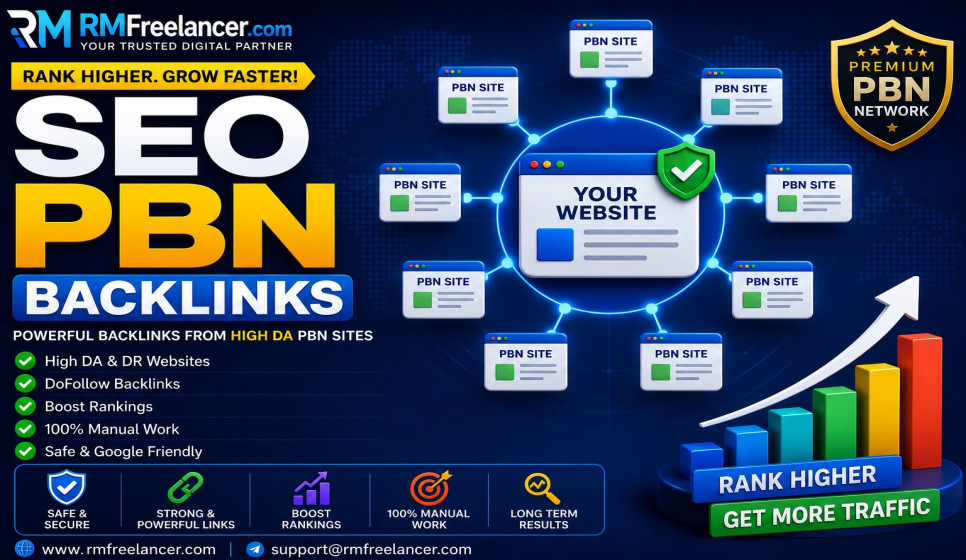
Here few PBN Backlinks Site List;
What Makes a Backlink Look Like It Might Come From a PBN?
Not every suspicious backlink is a PBN link. Sometimes a weak site just has poor content. Still, there are common signals people look at.
The site may have low-quality or thin content.
It may publish in many unrelated niches.
It may have a strange mix of outbound links.
It may have few real visitors or engagement signals.
It may use generic authors, stock images, or copied content.
It may have a recent domain history with an old-looking site rebuild.
It may appear to exist mostly to link out rather than serve users.
These are not proof by themselves, but when several signs appear together, SEOs may suspect a private network.
The SEO Appeal of PBN Links:
From a pure tactical perspective, PBN links appeal to people because they can work in the short term. Search engines often use links as a trust signal, so a link from a site that already has authority can influence rankings.
A well-placed link from a controlled site can help a page index faster, pass relevance through anchor text, and create a temporary ranking boost. For affiliate marketers, local SEO operators, and aggressive niche site builders, that can sound extremely useful.
But the key word is temporary. Search engines have become much better at detecting unnatural link behavior, and manual actions can wipe out the gains very quickly.
The Risks of Using PBN Backlinks:
This is where the conversation matters most.
PBNs violate the spirit, and often the letter, of search engine guidelines because they are designed to manipulate rankings rather than earn genuine editorial endorsement. That means the risk is real.
A site can lose rankings if search engines detect unnatural patterns.
A manual penalty can reduce visibility or remove the site from results.
The network itself can be devalued over time, making the links less effective.
Buying or maintaining PBN sites can become expensive.
If one site in the network is exposed, the entire setup may become useless.
Even if a PBN works at first, it creates a fragile SEO strategy. You are relying on deception, and deception tends to age badly.
Why Some SEOs Still Talk About Them?
Despite the risks, PBNs still come up because they can deliver fast results in certain niches. In highly competitive or spam-heavy markets, some operators use them as a shortcut. Others use them because they do not fully trust outreach or content-only strategies to move the needle quickly.
The reality is that the SEO industry has always had a split between short-term tactics and long-term brand building. PBNs sit firmly in the short-term, high-risk category.
Safer Alternatives to PBN Backlinks:
If your goal is stronger rankings, there are much safer and more durable strategies.
You can earn editorial backlinks through useful content, original research, and digital PR.
You can build topical authority by publishing content clusters around one subject.
You can improve internal linking so your strongest pages support weaker ones.
You can earn links from relevant industry blogs, directories, and local citations.
You can create tools, statistics pages, or resources that people naturally reference.
You can update and improve pages that already have impressions but weak click-through or ranking performance.
These methods may take longer, but they create assets that hold value instead of a network that can collapse overnight.
How to Evaluate Backlink Opportunities the Right Way:
Instead of asking whether a backlink comes from a PBN, a better question is whether the link is likely to be valuable and safe.
Ask whether the site has real traffic.
Ask whether the audience matches your topic.
Ask whether the content is editorially useful.
Ask whether the site links out naturally or only for SEO.
Ask whether the page will still exist in six months.
Ask whether the link makes sense for a real user, not just for an algorithm.
That mindset helps you focus on sustainable SEO instead of chasing shortcuts.
Frequently Asked Questions (FAQs)
ANSWER: When looking for PBN backlink lists, focus on those that offer a selection of websites that have useful and relevant content. It’s important to check the website’s history, how it has performed with backlinks, the domains that are linking to it, its visibility in search results, and the overall quality of the content on the site.
What should I check before choosing links from a PBN list?
ANSWER: Before selecting links from a PBN list, take the time to review the website's relevance to your niche, the structure of its backlink profile, the content that has been published on the site over time, its visibility in search engine results, whether the site is properly indexed, how many other websites it links to, and if there are any signs that the site might be involved in spammy practices.
Why are PBN backlinks used for SEO?
ANSWER: PBN backlinks are often used to gain more control over the placement of links and the anchor text used. This can help in improving search rankings. However, if the main purpose is to manipulate rankings rather than naturally earning backlinks, it could break the rules set by search engines.
Can PBN backlinks improve search rankings?
ANSWER: While PBN backlinks may have the potential to influence search rankings, it doesn't mean they will definitely do so. Search engines are constantly improving their algorithms to detect and penalize manipulative practices. Therefore, rankings depend on a variety of other SEO factors as well.
Why is niche relevance important for backlinks?
ANSWER: When a backlink comes from a website that is relevant to your industry, it's more likely to signal to search engines that your content is of value to users. A link from a related niche is more meaningful and can help with better rankings than a link from an unrelated site.
How can I evaluate the backlink profile of a website?
ANSWER: To evaluate the backlink profile, look at the quality and relevance of the domains that are linking to the site, the distribution of anchor texts used in the links, the patterns in how the links are structured, and whether the links seem to be part of a natural linking strategy or something that looks artificial and spammy.
Does a high DA or DR score mean a backlink is valuable?
ANSWER: Not necessarily. DA (Domain Authority) and DR (Domain Rating) are metrics created by third-party tools and can help you compare websites initially. However, they shouldn’t be considered as a direct measure of a website’s actual SEO performance or value.
How can I identify low-quality PBN backlink lists?
ANSWER: Look out for lists that include websites that are not related to your niche, use anchor texts that don’t sound natural, have copied or automated content, show suspicious redirects, have too many outgoing links, or contain a large number of low-quality or spammed backlinks.
Should I check the historical content of a website?
ANSWER: Yes. Checking the historical content of a website can help you understand its past performance, whether it had any issues with spam or unrelated niches, if it used redirects in the past, or if there were major changes in how the site functioned. This can give you a clearer idea of its reliability and potential for future use.
Are expired domains useful for backlink building?
ANSWER: Some expired domains might still hold useful historical signals, such as past backlinks and traffic. However, others may have a history of spam or poor backlink profiles. It is crucial to evaluate each expired domain thoroughly before using it for backlink building.
How many PBN backlinks should I build?
ANSWER: There isn't a specific number of PBN backlinks that will guarantee better rankings. What’s more important is having a diverse and relevant backlink profile that can sustain your SEO efforts better than focusing solely on the quantity of backlinks.
Are PBN backlinks permanent?
ANSWER: No, PBN backlinks are not guaranteed to last. Links can be removed, the websites they come from might disappear, domains can expire, and search engines may stop giving value to certain types of links, especially if they are seen as manipulative.
What are the risks of PBN backlinks?
ANSWER: There are several potential risks associated with using PBN backlinks. These include the possibility that the links could be ignored by search engines, cause fluctuations in rankings, lead to a loss of link value, or even result in search engine penalties if the practice is mainly used to manipulate rankings.
Can PBN backlink lists guarantee Google rankings?
ANSWER: No, no PBN list or backlink service can guarantee Google rankings. Search rankings are influenced by a wide range of factors including the quality of your content, its relevance, the level of competition, technical SEO, domain authority, and many other signals.
What are safer alternatives to PBN backlinks?
ANSWER: Instead of using PBN backlinks, consider safer and more sustainable SEO strategies such as digital public relations, editorial outreach, creating high-quality content marketing, forming industry partnerships, getting expert contributions, reaching out for resource pages, and earning backlinks naturally through valuable content. These methods are more ethical and can lead to long-term SEO success.
Final Thoughts,
PBN backlinks are used because they offer control, speed, and the promise of ranking gains. That is why people search for PBN backlink lists in the first place. They want access to domains, networks, or patterns that can be used to influence search results.
But the short-term appeal comes with major long-term risk. Search engines are built to reward genuine authority, relevance, and trust. A private network may work for a while, but it can also lead to penalties, wasted money, and unstable rankings.
Have questions about our services? Contact us today for fast, reliable, and professional customer support always.
Website: https://rmfreelancer.com/
Email: support@rmfreelancer.com
Phone: +1 307-243-8976
RM Freelancer Office:
30 N Gould St, Ste R, Sheridan, WY 82801, USA


