16
JunFinding Reliable PBN Backlinks Lists: A Complete Guide to PBN SEO
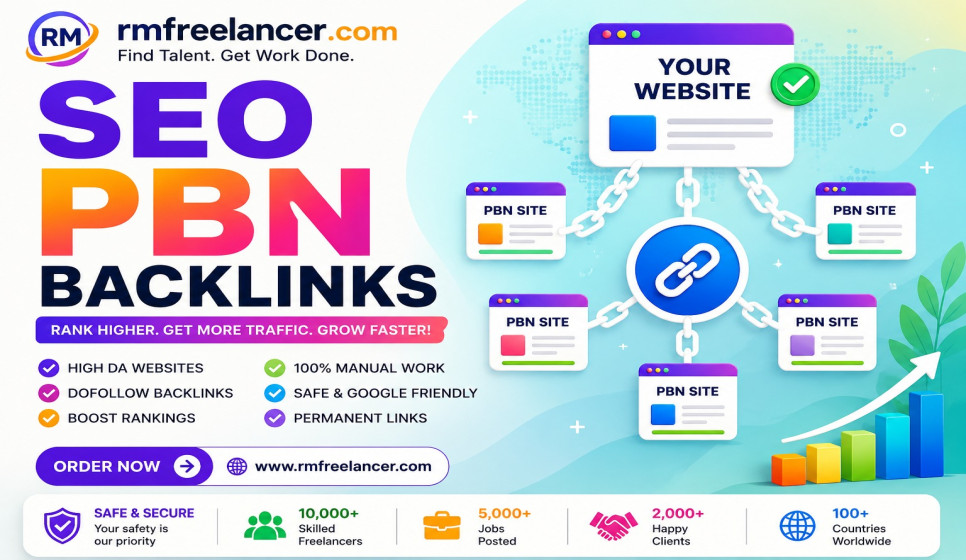
If you spend time in SEO circles, you will eventually hear people talk about PBN Backlinks lists. PBN stands for Private Blog Network, a group of websites created or acquired mainly to pass link authority to another site. In practice, people use PBNs to try to influence rankings faster than they could through normal outreach, content marketing, or digital PR.
A guide about “finding reliable PBN backlinks lists” usually means one of two things. Some people are looking for lists of domains that may already belong to a private network. Others want lists of expired or aged domains they can turn into their own PBN sites. In both cases, the goal is usually the same: control over backlinks, anchors, and placement.
That said, PBN SEO is controversial for a reason. It can create short-term ranking gains, but it also carries real long-term risk. Search engines are very good at spotting link schemes, and once a network is exposed, the value can disappear quickly. So if you are reading this to understand the topic, it is important to look at both the tactical appeal and the practical danger.
What a PBN Backlink Really Is?
A backlink is any link from one website to another. Search engines use backlinks as signals of authority, relevance, and trust. A PBN backlink is different because it comes from a site that is not mainly publishing content for readers. Instead, it exists to support another website’s rankings.
That means the link is not earned in the same way an editorial mention would be earned. It is usually placed because the site owner controls the network and wants to transfer authority to a target page. The website may look legitimate on the surface, but its main purpose is to influence search results.
This is why people see PBN links as powerful. They can be placed exactly where the owner wants, with the anchor text the owner wants, pointing to the page the owner wants. That level of control is the main attraction.
Why People Search for PBN Backlinks Lists?
People search for PBN backlink lists because they want speed and leverage. A strong backlink profile can be expensive to build the normal way. Outreach takes time. Guest posting takes time. Digital PR takes time. And even when those methods work, the results are not always predictable.
A PBN list seems attractive because it promises direct access to sites that already have authority or link equity. If the domains in the list have historical backlinks, aged domain signals, or relevant topical authority, they may appear to be shortcuts into rankings.
Some people use these lists to find domains for their own network. Others use them to study competitors. Some are simply trying to avoid paying for links that do not move the needle. In every case, the underlying motivation is usually the same: control the ranking process more tightly.
Here few PBN Backlinks Site List:
The word reliable is important, because many so-called PBN lists are not actually useful.
A reliable list, in the eyes of a PBN buyer, usually contains domains that seem clean, aged, and strong enough to pass value. People often look for domains with real backlink histories, relevant topical themes, and signs that the site had legitimate use at some point in the past.
The problem is that a list can look good on paper while still being risky. A domain might have authority metrics, but those metrics do not guarantee that the site is safe to use. A domain could also have a complicated history, spammy link patterns, or previous ownership issues that make it dangerous.
That is why people who chase “reliable” PBN lists often spend a lot of time checking old archives, backlink profiles, and domain history. They want to reduce the chance that a domain is already flagged, burned, or devalued.
The Usual Signs People Look For:
In the SEO community, people often judge a potential PBN domain by looking for signals that suggest it had a real past.
They may prefer domains with consistent historical content rather than sudden topic changes. They may like sites that have backlinks from real websites rather than obvious spam sources. They may avoid domains that were previously used for gambling, pills, adult content, or mass-generated pages. They may also prefer domains with clean brand names and natural-looking anchor text distributions.
Another thing people often check is whether a domain was repurposed too aggressively. If a site suddenly changes from one niche to another overnight, that can be a footprint. If every site in a supposed network looks built from the same template, that can be a footprint too.
These details matter because PBNs are only useful if they remain hidden and credible enough to continue passing value.
Why PBN SEO Can Work Short Term?
The reason PBN SEO keeps coming up is simple: links still matter.
A page with strong links can outrank a page with weak links, even when the on-page content is similar. That is why a carefully placed PBN backlink can appear effective. It can send relevance and authority through a link that the owner fully controls.
For some niches, especially affiliate SEO, local SEO, and competitive informational keywords, this can produce fast movement. The site may rise in rankings after new links are added, which makes the strategy look validated.
But the problem is not whether PBNs can ever work. The problem is whether they can keep working without consequences. That is where the strategy becomes fragile.
The Risks Behind PBN Backlinks Lists:
PBNs are risky because they exist to manipulate rankings rather than earn them naturally. Search engines do not want websites to rank simply because someone built a hidden network of support sites. That means the entire strategy sits in a gray or black-hat area.
A site using PBN links can lose rankings when algorithms detect unnatural patterns. It can also receive a manual action if the network is exposed. Even if no penalty happens immediately, the links may be devalued over time.
There is also a financial risk. Buying or rebuilding domains, adding content, hosting multiple sites, and maintaining the network can become expensive. If the network loses value, that cost is often wasted.
And there is a reputational risk. If clients, partners, or competitors discover the strategy, it can undermine trust. That matters especially for agencies and brands that want to be seen as credible and long-term focused.
Why “Finding Lists” Is Harder Than It Sounds:
Many people imagine there is a clean database somewhere with ready-to-use PBN backlinks lists. In reality, that is rarely true.
Private networks are private by design. They are meant to be hidden. What people usually find instead are indirect clues, expired domain marketplaces, suspicious backlink patterns, or reused footprints from older SEO setups.
That means the search for reliable PBN lists often turns into a lot of manual checking. People compare domain histories, look for sitewide patterns, inspect backlink profiles, and try to estimate whether a domain has been abused before. It is a lot of effort for something that may still fail later.
Better Questions to Ask Than “Is This a Good PBN List?”
If you are evaluating backlink opportunities, there are smarter questions than whether a list is “reliable.”
Ask whether the site has real traffic. Ask whether the audience matches your niche. Ask whether the link makes sense to a human reader. Ask whether the page is likely to exist six months from now. Ask whether the site seems to exist for users or just for SEO.
Those questions move you away from manipulation and toward durable link building. They help you focus on quality signals that are more likely to hold up over time.
Safer Alternatives to PBN SEO:
If your real goal is rankings, there are safer and more sustainable ways to get there.
You can publish genuinely useful content that earns links naturally. You can do outreach to relevant sites and build editorial relationships. You can create original data, tools, or guides that people want to cite. You can strengthen internal linking so existing authority flows better across your site. You can also improve technical SEO so the links you already have are used more effectively.
These methods may take longer than a PBN, but they reduce the risk of penalties and build real equity into your brand.
Frequently Asked Questions (FAQs)
1.
How can I identify a reliable PBN backlink list?\
ANSWER: To determine if a PBN backlink list is trustworthy, you should focus on factors like the relevance of the websites included, the quality of the backlinks, their historical performance, the credibility of the referring domains, the standards of the content, and the overall trustworthiness of the sites. It's not just about how many links are available, but whether they are genuinely valuable and relevant to your website. 2. What factors make a backlink list trustworthy?
ANSWER: A reliable backlink list should feature websites that are thematically related to your content, have natural backlink profiles that don't look forced, have a consistent online history, show realistic patterns of outbound links, and demonstrate real activity such as regular content updates or user engagement. These elements help ensure that the backlinks are authentic and not artificially created. 3. Why should I examine the backlink profile?
ANSWER: Looking at a website's backlink profile is important because it can help you understand whether the website's authority is built through reputable, high-quality sources or through spammy and artificial links. While having a large number of backlinks might seem impressive, the quality of those links is ultimately more important in determining a site’s true authority. 4. How important is niche relevance?
ANSWER:
Niche relevance plays a crucial role in the effectiveness of backlinks. A link from a website that covers a related topic is much more beneficial than one from a completely unrelated site. This is because search engines and users both value links that provide context and support the content's relevance and usefulness. 5. Should I review the site's historical content?
ANSWER:
Yes, reviewing a site's historical content is essential.
It can help you identify past issues like spammy behavior, unrelated topics, excessive redirects, or significant changes in the site's purpose. This information is vital in assessing the long-term reliability and trustworthiness of the site.
6.
Does DA or DR prove that a backlink is high quality?
ANSWER: No, Domain Authority (DA) and Page Authority (DR) are third-party metrics that can give you an initial sense of a website's strength, but they shouldn’t be the only factors you consider. These scores should be used in combination with other factors such as niche relevance, backlink quality, site history, and content standards to gauge the true value of a backlink. 7. How can I recognize suspicious backlinks?
ANSWER: There are several red flags to watch for when evaluating backlinks. These include unnatural patterns in anchor text, links from irrelevant websites, content that appears to be generated automatically, sudden spikes in backlink activity, an unusually high number of outbound links, and a large volume of low-quality or spammy links. 8. Why is organic visibility useful when evaluating websites?
ANSWER:
Consistent organic visibility can be a strong indicator that a website has a genuine presence in search engines. However, it's important to remember that traffic estimates or other metrics should be used as supporting evidence rather than definitive proof of a website's quality or effectiveness.
9.
Are expired websites automatically good for SEO?
ANSWER:
No, an expired website does not automatically mean it's good for SEO.
While it may have a useful history, it could also contain spammy content, irrelevant backlinks, or have a history of abuse. Therefore, it's crucial to review the website’s past performance and backlink profile before considering it for backlink purposes.
10.
How many backlinks should I obtain from a PBN list?
ANSWER: There is no set number of backlinks that is ideal. What matters most in SEO is building a diverse and relevant backlink profile rather than focusing solely on the quantity of PBN links. Quality and relevance should always be the key considerations. 11. Can PBN backlinks improve search rankings?
ANSWER:
PBN backlinks can be used as part of an SEO strategy to potentially influence rankings, but there are no guarantees. Search engines are constantly evolving and may penalize or ignore links they perceive as manipulative or unnatural.
12.
What risks should I consider with PBN SEO?
ANSWER: Using PBN SEO comes with several risks, including the possibility that links may lose their value over time, rankings could fluctuate, websites could be deindexed, or search engines could take action against sites involved in manipulative or unethical link-building practices. 13. Can purchased PBN backlinks be permanent?
ANSWER: There is no guarantee that purchased PBN backlinks will be permanent. Websites may choose to remove links, domains can expire, and search engines may change their approach to evaluating or ignoring certain types of backlinks. Therefore, it's important to be cautious and informed when using such services. 14. Can a PBN backlink list guarantee Google ranking improvements?
ANSWER:
No, no PBN list, backlink package, or SEO provider can guarantee specific improvements in Google rankings. Search performance is influenced by a variety of factors, including content quality, relevance, competition, technical SEO, and other elements, making it impossible to predict or ensure exact outcomes.
15. What are safer ways to build backlinks?
ANSWER: Instead of relying on PBNs, consider safer and more sustainable methods like digital PR, editorial outreach, creating valuable content that naturally attracts backlinks, contributing as an expert in your field, forming industry partnerships, reaching out to resource pages, and other strategies that earn backlinks in a natural and ethical way.
Final Talking,
A lot of people are drawn to PBN backlinks lists because they promise control, speed, and shortcut-style SEO gains. That is the core appeal of PBN SEO. But the same features that make PBNs attractive also make them risky.
A “reliable” PBN list is often less reliable than it first appears. Domains can be burned, devalued, or exposed. What looks like authority today can turn into a liability tomorrow. So while PBNs may still be discussed in SEO, they are not a stable long-term strategy.


