21
OctBest AI-Powered SEO Backlink Marketplace for Businesses
Businesses utilize search engines to connect with customers who are researching various products and services. An AI-driven SEO backlink marketplace can assist in locating publishers for content, publicity, or sponsored placements. Rather than reaching out to sites individually, a team can browse a catalog, compare details, and monitor campaign activity within a single workflow.
While this technology can significantly reduce research time, it does not automatically confer value to every link. The effectiveness of a placement is contingent on the publisher, the target audience, and the context of the article. Organizations should select a marketplace based on its transparency and relevance rather than merely its AI label, catalog size, or promises of rapid rankings.
### Understanding the Role of an AI Backlink Marketplace
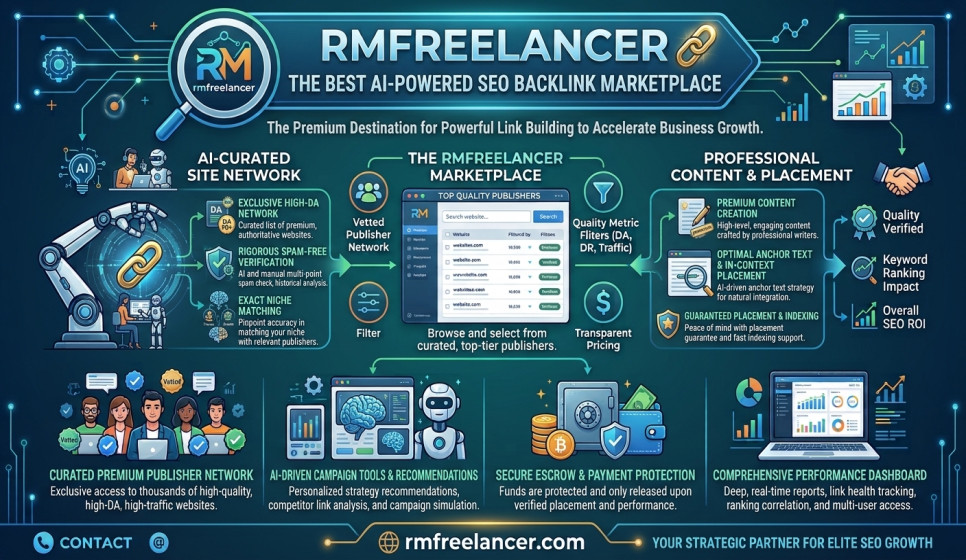
A backlink marketplace serves as a bridge between businesses and publishers, writers, or outreach providers. Its offerings might encompass sponsored articles, guest contributions, links inserted into existing content, digital PR, or brand mentions. Buyers often have the option to filter listings by subject, language, country, traffic estimates, SEO metrics, and pricing. Some platforms also provide additional services such as content writing, competitor analysis, order management, and link tracking.
AI tools can enhance the search or organization of inventory. For instance, a system could recommend publishers based on a campaign brief, categorize sites by topic, summarize listing details, or flag potential overlaps with current campaigns. It can also aid in drafting content and generating reports. These features are most beneficial when they expedite research while allowing marketers to make the final decision after reviewing the underlying site.
It’s important to note that "AI-powered" can signify different functionalities. Inquire about what a specific feature does and what data it utilizes. A topical recommendation is not the same as simply sorting by domain score. Verify that the publisher data is current and ensure that there’s a way to validate the match. AI can facilitate poor decisions just as effectively as it can support sound ones.
### Expectations from a Professional Platform
A business-friendly marketplace should provide clear, comprehensible listings prior to payment. Each entry ought to detail the publisher, placement type, topic, price, editorial prerequisites, and expected delivery timelines. Buyers should have access to example content or sample URLs when available. Clearly outlined terms should specify how long the placement is expected to remain active and the remedies available if it disappears or fails to meet the agreed standards.
The platform should additionally aid in campaign management with features such as saved searches, project workspaces, communication channels with publishers, approval processes, and live-link reporting. Brands with multiple divisions may require team access and exportable records; smaller enterprises may prioritize clear pricing and prompt support. Select features based on your specific needs instead of opting for the most complex plan by default.
Some well-established services merge publisher catalogs with writing, brand mentions, or PR offerings. For example, WhitePress includes services like article publication, link insertion, digital PR, copywriting, and backlink management. Its site promotes filters for publishers and monitoring for publications. Similarly, PressWhizz markets itself as an AI-supported platform that offers publisher searches, listing information, competitor research, and order tracking. These instances showcase diverse platform methodologies; it’s wise to verify each company's claims regarding features and coverage before making a purchase.
### Evaluating a Publisher
Begin by evaluating the compatibility of the audience. Determine where the publisher's readers are located and whether their recent content aligns with the interests of your target demographic. A specialized publication with readers that match your customers may prove to be more beneficial than a large general-interest site.
Next, analyze the editorial environment. Read through a few recent articles. Look for original reporting, well-informed explanations, consistent editing, identifiable authors, and a compelling rationale for the publication's existence. Exercise caution if a site publishes irrelevant content in bulk, contains thin pages primarily for outbound links, or includes numerous commercial anchors in every post. While traffic estimates and third-party authority metrics can provide context, neither guarantees quality or business relevance.
Examine the placement itself. Does the article address a genuine question? Is the link appropriate in that part of the text? Does the destination page meet the reader’s expectations? Request the draft or live URL and review it before completing the order. Sound placement decisions should resonate with readers, even in the absence of search engine considerations.
### Leveraging AI Without Sacrificing Human Insight
Develop a brief that outlines your audience, target countries, topic, landing page, and objectives. Use AI tools to generate search terms, categorize publisher options, or highlight important details, and then manually verify each site. Human oversight can detect potential reputational concerns and audience mismatches that automated systems might overlook.
Treat AI-generated content as a starting point, not the final product. A human editor should ensure that claims are accurate, that the article is appropriate for the publication, and that the language flows naturally. Avoid submitting identical content to multiple sites. An effective marketplace should facilitate access to relevant publications rather than reducing content creation to mass production.
### Navigating Paid-Link Policies and Campaign Risks
A marketplace cannot assure better rankings, and businesses should exercise caution when considering services that guarantee rapid results from numerous links. Google identifies buying or selling links for ranking purposes, automated link generation, and paid articles that pass ranking credit as instances of link spam. It allows advertising and sponsorship links when labeled with rel="sponsored" or rel="nofollow".
Inquire whether a placement is sponsored, how the publisher discloses it, and what link attributes are utilized. Clarity on these matters should be established before launching the campaign. Paid placements can legitimately serve advertising and referral needs but should never be presented as a reliable means of manipulating search outcomes. Document the agreed content, destination, live URL, and disclosure.
### A Pragmatic Approach to Getting Started
Establish a clear, measurable goal—such as reaching a new audience or drawing appropriate referral visits. Create a shortlist of publishers that align with your topic and market. Compare overall expenses, including content creation, revisions, translation, and monitoring. Then conduct a small pilot test rather than committing to a larger order. Evaluate the accuracy of listings, communication effectiveness, editorial quality, and whether the placement remains live. Track qualified visits and inquiries, not just the number of links delivered.
If the pilot proves successful, consider gradually expanding your efforts while continuing to review placements. If it does not, analyze whether the issue stemmed from audience fit, content quality, publisher credibility, or the campaign’s objectives before purchasing additional links. This disciplined approach helps keep software dashboards from becoming a substitute for tangible results.
### Selecting the Right Marketplace
The ideal AI-powered SEO backlink marketplace for a business is one that simplifies the discovery of relevant opportunities while providing sufficient information for buyers to make informed judgments. AI should streamline repetitive tasks while ensuring that quality, disclosure, and strategy remain under human oversight. Compare services based on real publisher inventories within your target market, transparent terms, editorial options, and reporting capabilities—not merely by headline figures.
When utilized thoughtfully, a marketplace can significantly enhance publisher research and campaign management. Pair it with robust content, genuine expertise, and manual reviews to create a controlled link-building process that boosts business visibility without resorting to shortcuts or unsubstantiated promises.
### 10 Frequently Asked Questions
1. **What is an AI-powered SEO backlink marketplace?**
It's a platform that assists businesses in locating publishers or link-building services, with AI potentially aiding in searches, matching, organizing campaign data, or content preparation.
2. **How can AI enhance link building?**
AI can categorize publisher listings, suggest search terms, summarize data, and facilitate routine reporting, but a human should always verify each site and approve placements.
3. **Does AI guarantee superior backlinks?**
No, AI serves as a workflow enhancement but does not assure publisher quality, traffic, or ranking boosts.
4. **What defines a valuable backlink for a business?**
A link is most useful when it is situated within relevant content on a credible site, offering readers a logical path to valuable information or products.
5. **Are domain authority scores sufficient for selecting a publisher?**
No, while scores can assist in comparison, it's essential to consider the publication’s subject, audience, recent articles, and editorial quality as well.
6. **What services do backlink marketplaces typically offer?**
Services may include sponsored articles, link insertions, content writing, digital PR, publisher outreach, brand mentions, and link monitoring.
7. **Does Google permit paid backlinks?**
Google stipulates that paid advertising or sponsorship links should be identified using rel="sponsored" or rel="nofollow". Links purchased to manipulate rankings might violate its spam policies.
8. **How should businesses evaluate marketplace costs?**
Assess the total cost, including writing, editing, revisions, translation, placement duration, monitoring, and any replacement terms.
9. **What is a prudent strategy for starting with a new platform?**
Set a specific goal, try a small order, verify the live placement against the initial agreement, and evaluate its relevance, disclosure, and reporting before scaling.
10. **What practices should be avoided when purchasing links?**
Steer clear of automated bulk-link guarantees, irrelevant websites, undisclosed networks, and guaranteed ranking assurances. Request sample URLs and detailed descriptions of the work involved.
### Top AI SEO Marketplace Platforms
Businesses have access to a variety of SEO marketplaces to discover professionals who offer backlink building, content optimization, technical audits, and link-building campaigns. Each platform presents unique service categories, pricing models, and provider selection processes.
**RMFreelancer:**
A freelance marketplace allowing businesses to find SEO services, backlink packages, and digital marketing solutions.
**Legiit:**
Offers specialized services for SEO, guest posting, content marketing, and local search optimization.
**SEOClerk:**
Features a variety of SEO-related services, including link building, website promotion, and backlink packages.
**Fiverr and Upwork:**
General freelancing platforms where clients can find SEO consultants, technical experts, and content creators.
**Konker:**
A marketplace dedicated to digital marketing and SEO services, showcasing offerings from independent providers.


